Under Bed Storage Ideas That Actually Save Space
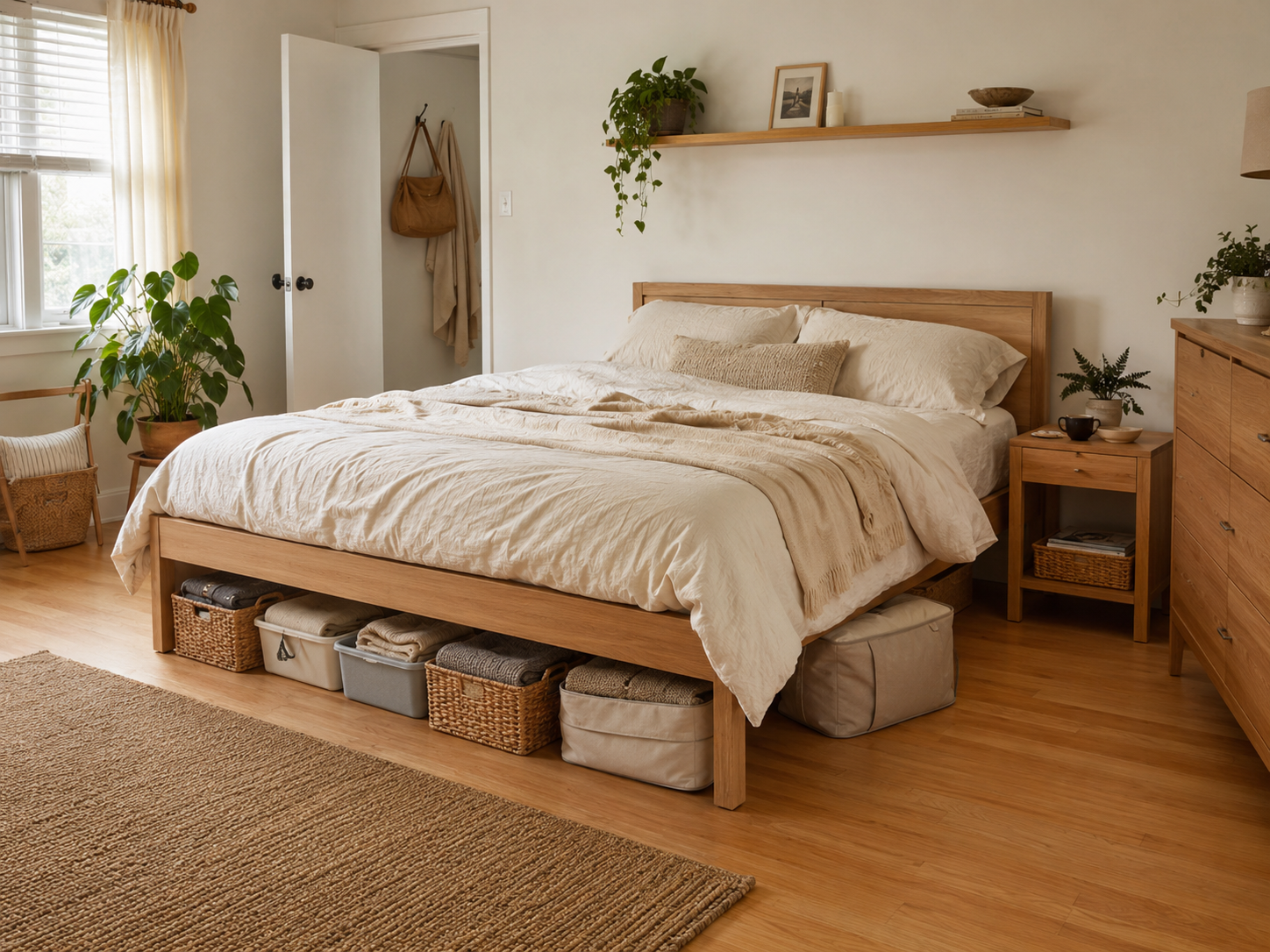
Under-bed storage is useful only when you can take things out and put them back easily. Before adding storage, decide what needs a place, measure the usable space, and check how a container will slide out and open.
Try a suitable container you already own first. Height matters, but so do the route past the bed frame, the space beside the bed, and access when the container is full.
This post contains affiliate links. As an Amazon Associate I earn from qualifying purchases.
Editorial review by Nookwise Living. Last reviewed September 8, 2026
Quick picks for under bed storage
If you already know what needs storing, use these categories as practical starting points. Check dimensions and access before choosing a product. These options have not been personally tested or ranked.
For seasonal clothes
Under bed storage bags
A flexible option for seasonal clothes, spare linens, and lightweight bedding you do not need daily. The contents determine the bag’s shape. Check its filled height against the available clearance and make sure you can reach the zipper.
For frequent access
Rolling under bed bins
Wheels may help when you pull stored items out often, provided the route is clear. Check total height including wheels, space beside the bed, and how the wheels suit your floor. The filled bin should remain manageable to move.
For bulky bedding
Vacuum storage bags
Compression can reduce the volume of suitable bedding and seasonal textiles you rarely need. Reopening and compressing a bag makes daily access cumbersome. Check the instructions for both the bag and its contents, then assess the filled, compressed dimensions.
Who this is for
Under-bed storage may help in small bedrooms, apartments, dorm rooms, and rooms with limited closet space when belongings lack a useful place and there is unused space beneath the bed. Keep daily items where they are easiest to reach; less-used belongings can go in less accessible spots.
If existing drawers, shelves, or closet storage are easier to use, start there. Limited pull-out space or awkward access may make another location more practical. For a bedroom without a built-in closet, see No Closet Storage Ideas for Small Bedrooms.
If you have checked the space and access, explore the under bed storage ideas below.
Choose under bed storage by fit and access
Start with one group of belongings that needs a better place. Remove anything that belongs elsewhere, then consider whether storing the remaining items under the bed would make them easier to manage. Use a more accessible drawer or shelf for daily essentials when practical.
Measure usable clearance and pull-out space
Measure from the floor to the lowest point along the route a container must travel, not just to the visible edge of the bed frame. Account for lower frame parts, legs, and crossbars. Measure the usable width and depth between these obstacles rather than treating the whole area as one open space.
Check the room beside the bed, too. There should be enough space to pull the container all the way out and open its lid or zipper without repeatedly moving nearby furniture.
Compare those measurements with the container’s full outside dimensions, including its lid, wheels, and any projecting handles. For a soft container, check its shape and height when filled; an empty bag may fit where a packed one will not.
A container can fit beneath the bed yet still be awkward to retrieve or open. If the frame leaves only a narrow opening or there is barely room to pull storage out, another location may work better.
Match storage to what you keep and how often you use it
For regularly used belongings, choose a spot and opening you can reach without unpacking other items first. Seasonal or less-used items can sit farther back, provided you can still retrieve them when needed. Keep the load manageable: heavy or awkwardly filled containers make frequent access harder.
Choose features around the contents. Flexibility may help with soft items, while structure can keep a container’s shape. Visibility or a label can help identify contents; compartments may be useful when items need to stay separate.
For dust protection, check how the lid or zipper closes rather than relying on the material alone. Construction varies by product. Consider compression only for suitable items you rarely need, following the instructions for both the storage bag and its contents.
Once these checks are clear, consider a storage type that meets them. If everyday use becomes more cumbersome than using storage you already have elsewhere, keep those belongings elsewhere.
Under Bed Storage Ideas for Small Bedrooms
Under bed storage bags for seasonal clothes
Flexible bags can hold seasonal clothes, spare linens, and lightweight bedding you do not need daily. Their shape and height change with the contents, so a packed bag may fit differently from an empty one.
Check first: Measure the filled height and confirm the whole bag slides beneath the frame. Check zipper access and handle construction, and keep the filled weight manageable.
Rolling under bed bins for easy access
Rolling bins may make frequently used belongings easier to retrieve when the pull-out route is clear. Wheels add height, and their usefulness depends on your floor and the filled weight.
Check first: Include wheels in the total height and check clearance along the full pull-out route. Leave room beside the bed to remove and open the bin, and keep the load manageable.
Clear plastic boxes for visible storage
Clear boxes keep smaller items grouped while letting you see the contents. Their rigid shape cannot adjust around bed-frame obstacles like a flexible bag.
Check first: Compare full outside dimensions, including the lid and projecting parts, with your space. Allow room to pull the box out and open it. Check the closure; a lid alone does not mean the box is airtight or dustproof.
Under bed shoe organizers for small bedrooms
Compartments keep shoe pairs separate and easier to identify. Sizes vary, so boots, taller shoes, and larger sizes may not fit every organizer.
Check first: Compare compartment dimensions with your shoes, then check the organizer’s full outside dimensions and filled height. Make sure it slides completely beneath the frame and pulls out fully, with enough room to open it and remove a pair.
Vacuum storage bags for bulky bedding
Vacuum bags compress suitable bulky bedding and seasonal textiles. They are more practical for less-used items, since reopening and compressing a bag makes frequent access cumbersome.
Check first: Follow the instructions for both the bag and its contents, including any limits on prolonged compression. Check valve and closure specifications, then assess the packed, compressed dimensions. The bag must still fit beneath the frame and remain manageable to pull out.
Fabric zip containers for structured textile storage
Fabric zip containers can hold clothing, linens, and other lightweight textiles. Reinforced sides may provide more shape than fully soft bags while remaining less rigid than hard plastic, but reinforcement varies by product.
Check first: Confirm the actual reinforcement and compare filled height and full outside dimensions with your space. Check handles and zipper access. The packed container should slide beneath the frame, pull out comfortably, and open normally.
Before you buy
Compare the product’s full outside dimensions with the usable space you measured earlier. Include wheel height, handles, and other projecting parts, and account for how a soft container changes shape when filled.
Check how the lid or zipper opens and whether you can pull the whole container out and handle it comfortably when packed. If reinforcement, compression, a particular closure, or compartment size matters to your choice, read the specifications and instructions rather than relying on product photos alone.
Practical under bed storage ideas for small bedrooms
Keep similar belongings together so retrieving one item does not mean searching through unrelated things. Put a label on the side you can see or reach. Place items you use more often near the accessible edge, with less-used belongings farther back.
Leave enough room inside each container to take things out and close it normally. Keep the weight manageable, and avoid arranging containers so tightly that moving one requires unpacking the others. Where practical, make them easy to remove so you can clean the floor beneath the bed.
Review the contents occasionally. If something stays untouched, decide whether it still needs that space rather than letting under-bed storage become a place where unused belongings disappear.
When under bed storage is not practical
Another location may work better if there is barely room to pull a container out, bed legs or frame parts restrict access, or a packed container is too heavy to move comfortably. Keep daily items in an existing drawer, shelf, or closet when that makes them easier to reach and return.
If the storage problem extends beyond the bedroom, Small Apartment Organization Ideas can help you work through other areas one zone at a time.
Under Bed Storage FAQ
Final thoughts
Choose one category of belongings and, if possible, try a suitable container you already own. Place it under the bed and use it when you next need those items. Check whether taking them out and putting them back is easier. If it is not, adjust the location or storage type before adding anything else.
Find your next practical starting point.