
Small Apartment Organization Ideas
Organizing a small apartment starts with one everyday frustration, such as shoes blocking the door or a cabinet that is hard to use. You do not need to tackle your whole home at once. This guide helps renters and anyone in a compact home use existing storage more effectively before deciding whether an additional organizer would help.
This post contains affiliate links. As an Amazon Associate I earn from qualifying purchases.
Editorial review by Nookwise Living. Last reviewed September 8, 2026
Start with small apartment zones
Choose a zone below, then focus on one spot that gets in the way of your daily routine.
- Choose a specific problem. Notice what is hard to find, reach, or put away.
- Clear that spot. Empty a shelf, drawer, or surface and remove anything that belongs elsewhere.
- Give everyday items a fixed place. Keep what you use often easy to reach and return.
- Try what you already own. Rearrange existing storage or reuse a suitable container where it helps.
- Check what still needs solving. If the problem remains, measure the available space and consider a storage solution that fits without making access harder.
Use the room sections for practical starting points and follow the specialist guides when you need more detail.
Entryway
Create a simple drop zone for shoes, keys, bags, and daily essentials.
Jump to entryway ideas →
Kitchen
Use shelf risers, pantry bins, and under sink storage to organize small cabinets.
Jump to kitchen ideas →
Bathroom
Use baskets, wall shelves, and compact organizers for everyday bathroom items.
Jump to bathroom ideas →
Closet
Use slim hangers, shelf dividers, bins, and hanging organizers to save space.
Jump to closet ideas →
Bedroom
Use under bed storage, drawers, and baskets to keep your bedroom calmer.
Jump to bedroom ideas →
Living room
Use closed storage, baskets, and compact furniture to hide everyday clutter.
Jump to living room ideas →
Small apartment entryway organization
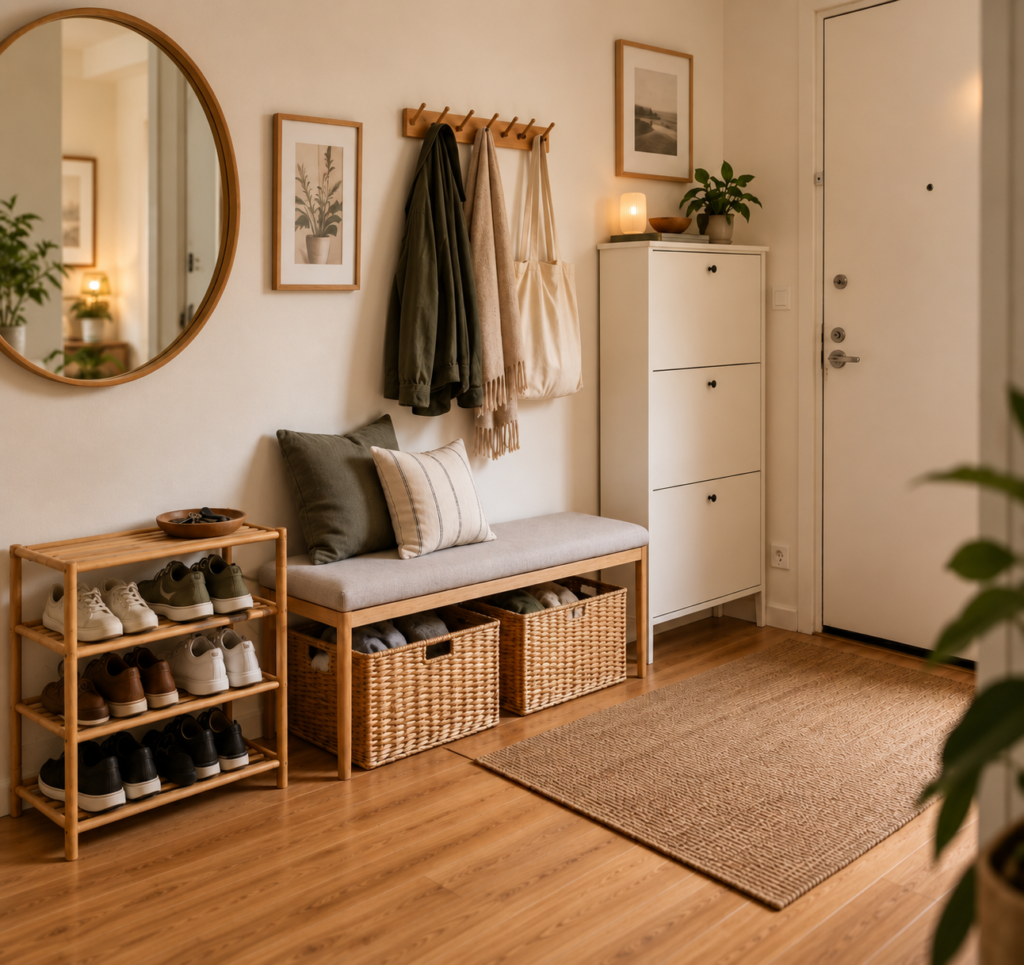
Shoes, coats, and bags become an entryway problem when they have no fixed place or spill into the walkway. Start with what you use each day. Move occasional shoes and bags elsewhere, and remove anything that does not belong by the door.
Give keys and incoming mail one landing spot on an existing shelf or piece of furniture, if there is room. Try hooks or a basket you already own for everyday items, provided they are easy to reach and do not crowd the entrance.
When floor space is limited, vertical storage may be more useful than another piece of furniture. Check how any wall storage needs to be mounted. Before choosing a shoe cabinet or bench, measure its depth and allow room to open both the front door and the storage itself. You should still be able to enter, set down a bag, and walk past comfortably. If adding storage makes those tasks harder, keep the setup smaller.
Storage to consider: If everyday items still lack a place, consider storage that leaves the walkway clear. Check furniture depth and door swing first.
See entryway storage options →
Small kitchen organization for apartments
Focus on one kitchen task that feels awkward: finding utensils in a drawer, reaching dishes in a cabinet, or clearing space to prepare food. Remove what does not belong in that spot and rearrange the storage you have so everyday items are easy to take out and put back. Keep enough counter space clear for cooking.
If an organizer might help, measure the cabinet opening and usable height and depth. Account for hinges, and check that you can reach the contents without moving several other items first.
For detailed advice by kitchen zone, see Small Kitchen Storage Ideas That Fit Your Space.
Storage to consider: If rearranging the cabinet has not solved the problem, check its opening, usable height and depth, and access before considering an organizer.
See kitchen organizer options →
Small bathroom storage ideas
Separate the products you use every day from spare toiletries, extra paper products, and other reserve supplies. Keep daily items within easy reach, and store backups separately where practical so they do not crowd the space you use each morning.
Open storage can work for a few frequently used items. Closed storage may help when many visible packages make the room feel busy, but the contents should still be easy to find. Try a basket or bin you already own before adding another organizer. Avoid packing it so tightly that taking out one item means emptying the rest.
Measure the available width, depth, and height before choosing extra storage. Under the sink, account for plumbing and leave access to pipes and connections. Consider where the organizer will sit and whether its materials are suitable for damp conditions or occasional splashes. More containers will not solve the problem if everyday supplies remain difficult to reach or return.
Storage to consider: When daily supplies and backups still compete for space, check available room, plumbing access, and suitability for the bathroom environment before adding storage.
See bathroom storage options →
Small closet organization ideas
Before adding anything to a crowded closet, identify what is difficult to use: the hanging rail, shelves, shoe storage, or space for small accessories. Separate clothes you wear regularly from seasonal or rarely used items, and remove anything that belongs elsewhere. Arrange the existing rail and shelves so everyday clothing is easy to reach.
Slim hangers may reduce bulk, but they will not solve a closet that holds more clothing than you can comfortably sort through. Shelf dividers or bins are useful only if they keep folded clothes or accessories easier to find and return. A hanging organizer can provide compartments, but it also takes up rail space that other clothing may need.
Check shelf depth, available height, and how easily you can reach the proposed storage. Leave room to lift out a bin or take an item from a compartment without disturbing everything beside it. Skip an organizer if it blocks access to clothing or makes part of the closet harder to use.
Storage to consider: Additional storage may help with a specific rail or shelf problem. Allow for the organizer itself and keep everyday clothing within reach.
See closet storage options →
Small bedroom organization ideas
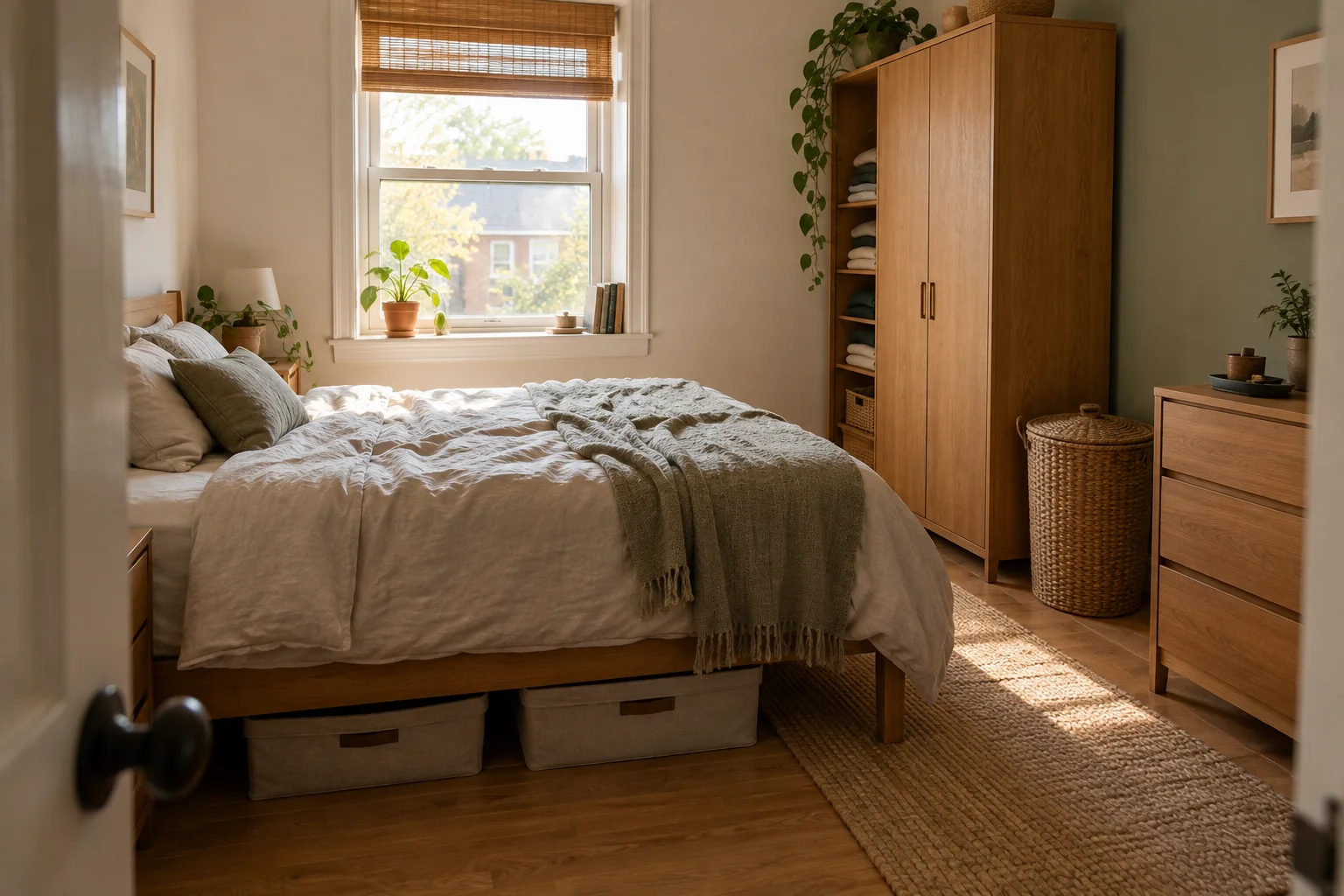
Keep the things you need at bedtime or each morning in an easy-to-reach spot. Start with existing nightstand drawers, dresser space, and storage under the bed. Give daily items a place where they are simple to put back, and reserve less convenient storage for belongings you use less often.
Under-bed space can work for seasonal clothing or spare bedding, provided you can access it comfortably. Measure the clearance beneath the bed, including any frame parts that hang lower. Check whether legs or nearby furniture prevent a container from being pulled all the way out. Avoid placing heavy belongings or frequently used items where retrieving them requires awkward lifting or moving furniture.
For more detailed guidance, see Under Bed Storage Ideas That Actually Save Space. If the bedroom has no built-in closet, No Closet Storage Ideas for Small Bedrooms covers that situation. Hidden storage should remain usable, not simply keep things out of sight.
Storage to consider: If existing drawers are not enough, consider accessible storage for less-used belongings. Check under-bed clearance and room to pull containers out.
See bedroom storage options →
Small living room storage ideas
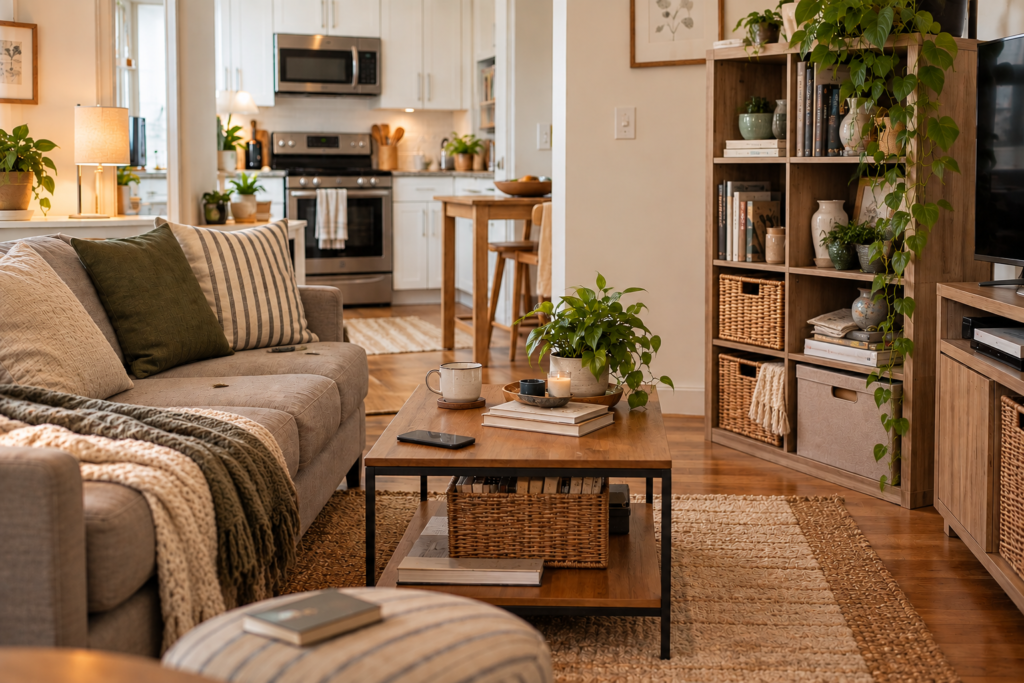
A small living room may also be your workspace, dining area, and the place where household belongings collect. Look at what needs to be put away when you switch activities. Give regularly used categories, such as work supplies, remotes, or blankets, a fixed place in the furniture and storage you already have.
Closed storage can reduce the visual clutter of mixed belongings. A basket or open shelf may be more convenient for items you reach for often, as long as they are easy to return and do not spill into the walkway. Choose the arrangement around daily use rather than trying to hide everything.
Before adding a storage ottoman or cabinet, measure its footprint and the space needed to open its lid, doors, or drawers fully. Check that you can use it without blocking a walking route or repeatedly moving another piece of furniture. Extra storage is less helpful if it makes the room harder to move through.
Storage to consider: If belongings still lack a fixed place, check the storage footprint and opening space. Keep walking routes clear.
See living room storage options →
Baskets, bins and shelves for small apartment organization
These categories are optional tools for a problem that remains after rearranging the storage you have. Measure the available space and check access before choosing anything. An organizer is useful only if it makes belongings easier to take out and put back.
They are grouped by room and by the problem they can help with. They are practical starting points, not personally tested or ranked products.
Entryway storage
Give everyday shoes, coats, or keys a fixed place when the current setup leaves them in the walkway. Vertical storage may help where floor space is limited.
Check first: Measure furniture depth and allow for the front door and storage doors to open. Check mounting requirements for wall storage.
More entryway options:
Shop coat racks →
Shop key holders →
Kitchen organizers
Grouping pantry items or using spare shelf height may help when rearranging a cabinet is not enough. Under-sink storage needs to fit around the plumbing.
Check first: Measure the opening, usable height, and depth, accounting for hinges. Keep pipes accessible and make sure contents remain easy to reach.
More kitchen options:
Shop shelf risers →
Shop pantry bins →
Bathroom storage
Separate daily products from reserve supplies when existing shelves or cabinets cannot keep both accessible. Extra storage should leave the bathroom easy to use.
Check first: Measure the space, leaving access to plumbing and fixtures. Check whether the materials and placement suit damp conditions or occasional splashes.
More bathroom options:
Shop bathroom baskets →
Shop under sink organizers →
Closet storage
Organizers may help separate accessories or keep folded clothing usable. Slim hangers can reduce bulk, but they do not solve an overfilled closet.
Check first: Allow for the organizer’s own footprint within the rail or shelf space. Check shelf depth, available height, and access to the clothing around it.
More closet options:
Shop slim hangers →
Shop closet bins →
Bedroom storage
Drawer compartments can separate daily items, while bins or fabric containers may suit belongings used less often. Hidden storage still needs to be accessible.
Check first: Measure under-bed clearance and room to pull a bin out. For drawer storage, check that the drawer opens and closes normally with its contents inside.
More bedroom options:
Shop drawer organizers →
Shop fabric cubes →
Living room storage
Keep work supplies, blankets, or other regularly used belongings in a fixed place so the room can switch between activities. An ottoman, basket, or shelf may help if it fits the way you use the space.
Check first: Allow for the footprint and full lid opening without blocking a walkway. For floating shelves, check mounting requirements and wall suitability.
More living room options:
Shop floating shelves →
Shop storage baskets →
Start with the category that solves your biggest daily problem first. Once one area feels calmer, it becomes easier to organize the rest of the apartment.
Small Apartment Organization FAQ
Final thoughts
Today, choose one spot that regularly slows you down and change its arrangement to make it easier to use. After using it, check whether belongings are simpler to take out and return, and whether nearby surfaces and walking space remain usable. Adjust anything that still gets in the way before moving to another zone.
Find your next practical starting point.