No Closet Storage Ideas for Small Bedrooms
A small bedroom without a built-in closet needs a clear place for hanging clothes, folded clothes, shoes and accessories, and seasonal items. These no closet storage ideas help you choose a setup around what you own and the room you have.
Start with usable drawers, shelves, or containers you already have. Measure the remaining space, including room to walk and open storage, before adding furniture or organizers.
This post contains affiliate links. As an Amazon Associate I earn from qualifying purchases.
Editorial review by Nookwise Living. Last reviewed September 8, 2026
Start with the clothes you need to hang, fold, and store
Sort your belongings before choosing storage. Set aside items that belong elsewhere, then check which categories already have a usable home.
Hanging clothes: Keep pieces that wrinkle easily together so you can judge the rail space needed.
Folded clothes: Group everyday basics for drawers, shelves, or bins.
Shoes and accessories: Give pairs and small items a separate place.
Seasonal items: Reserve less accessible storage for clothes and bedding you rarely use.
Use a clothing rack when you need flexible hanging space
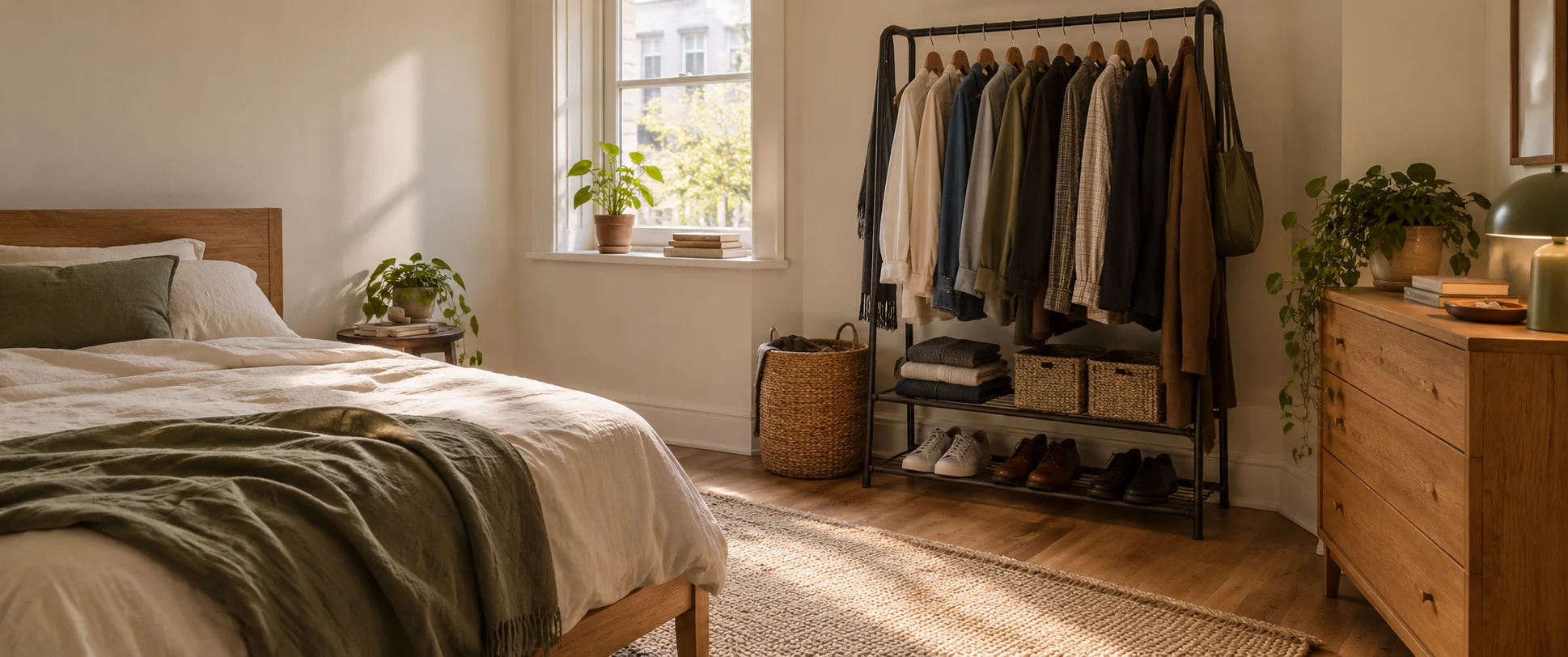
An open rack can suit a smaller hanging wardrobe. Leave enough rail space to find and remove clothing without pushing everything aside. A covered wardrobe may be more useful if you prefer to keep clothes out of sight.
Compare the full footprint and rail height with your room and longest garments. Allow walking space in front; wheels are useful only when there is room to move the rack.
Add drawers or closed storage for folded clothes
Use existing drawers or closed containers for clothes that do not need to hang. Separate everyday basics into a few manageable categories. If more drawer storage is needed, allow room to open drawers fully without blocking the bed or walkway, and follow any assembly or anchoring instructions.
Use shelves and vertical space for clothes you do not hang
A shelf can hold folded clothes, bags, or containers when floor space is limited. Try an existing shelf first; a narrow freestanding unit may work where wall mounting is impractical.
Check shelf depth and reachable height. For wall-mounted storage, follow the installation requirements for the wall, fixings, and intended load.
Keep shoes and accessories in their own zone
Keep regularly worn shoes together near an easy-to-reach spot. Use a tray, basket, or shelf you already own for bags and smaller accessories. Choose extra storage around the space available: a low rack needs floor width, while a narrow unit or door organizer uses height.
Use under-bed storage for seasonal overflow
Under-bed space can hold seasonal clothing or spare bedding. Measure the lowest clearance along the container’s route, including lids, handles, or wheels, and leave room to pull it out and open it.
For container types, dust protection, and access checks, see Under Bed Storage Ideas That Actually Save Space.
Storage options for a closet-free bedroom
Consider these categories only for a storage need that remains. Compare dimensions and access with your room before choosing. The products below are practical starting points, not personally tested or ranked.
Clothing racks
Choose an open rack around the amount of clothing that needs to hang and the floor space available. Leave room to move past it and reach the rail.
Movable hanging storage
SONGMICS Rolling Rack
Open hanging storage for regularly worn clothes, with wheels for repositioning when the room allows.
Check first: Compare the full footprint and rail height with your garments; leave walking space around the rack.
Hanging space with shelves
VIPEK V1 Rack
A hanging rail and shelves keep clothes, folded items, and accessories in one storage area.
Check first: Check overall dimensions, rail clearance, and shelf depth against what you plan to store.
Compact rolling setup
VIPEK R2 Mini Rack
A compact rolling rack for a smaller group of hanging clothes where floor space is limited.
Check first: Check the full footprint and rail height, and allow room to reach and move the rack.
Covered and portable wardrobes
Covered wardrobes can keep hanging clothes less exposed. Allow for the entire unit and for opening the cover, not just the space it occupies when closed.
Covered movable storage
P1C Covered Closet
Covered hanging storage for keeping clothes out of sight in a bedroom without a built-in closet.
Check first: Measure full width, depth, and height; allow room to open the cover and reach your clothes.
Contained closet-free setup
Calmootey Portable Closet
A portable wardrobe for grouping hanging and folded clothing in a more contained storage area.
Check first: Compare full dimensions with your room and leave clearance to open the cover and use each section.
Drawer storage for folded clothes
Choose drawer storage around the folded clothes that need a home. Check the full footprint and drawer-opening space before adding another unit.
Compact drawer storage
AODK 4-Drawer Dresser
A compact drawer unit for separating everyday folded clothes into a few easy-to-reach categories.
Check first: Check footprint, total height, and drawer-opening space; follow any assembly and anchoring instructions.
More drawer capacity
GcdPai 6-Drawer Dresser
A six-drawer unit for keeping folded clothing separated when a smaller setup is not enough.
Check first: Compare outside dimensions and drawer clearance with your room; follow any assembly and anchoring instructions.
Furniture-style storage
Woodtalks Drawer Chest
A three-drawer chest for folded clothes when you prefer a more furniture-like storage piece.
Check first: Measure the footprint, height, and full drawer extension; follow any assembly and anchoring instructions.
Shoes and accessory storage
Choose shoe storage around the space available: floor width, vertical height, or a suitable door. Check the format against the shoes and accessories you own.
Adjustable shoe storage
3-Tier Expandable Shoe Rack
An adjustable-width rack for keeping regularly worn shoes together in a low floor-storage zone.
Check first: Compare the chosen width and shelf spacing with your floor space and the shoes you own.
Narrow vertical storage
Tall Narrow 10-Tier Shoe Rack
A tall, narrow rack for grouping shoes where vertical space is more available than floor width.
Check first: Check overall height, depth, and shelf spacing; follow any stated setup or anchoring requirements.
No extra floor space
GORILLA GRIP Door Organizer
Door-hung pockets for shoes or small accessories when you want to keep floor space clear.
Check first: Check pocket sizes, door fit, and hanging hardware; make sure the door opens and closes normally.
No Closet Storage FAQ
Final thoughts
Create a closet-free setup that is easy to maintain
Give each category a fixed home and leave enough room to put items back without rearranging everything. After a week of use, adjust any spot that is awkward. Review seasonal storage when the weather changes so it does not become a holding area for unwanted clothes.
For other storage problems in a compact home, see Small Apartment Organization Ideas. If you need help choosing where to begin, visit Start Here.
Find your next practical starting point.